Sleeping Less in Summer: Does It Affect Your CPAP Therapy? | Resmed UK
What can we help you find?
Search for masks, machines, accessories...

Sleeping less in summer? Here’s what CPAP users should know

Sleep Health Fatigue Seasonal Travel with CPAP

Summer often brings a welcome change of pace. Holidays, weekends away, social events and longer evenings are some of the pleasures of summer. But they can also mean later bedtimes and fewer hours of sleep than usual.

If you’re using continuous positive airway pressure (CPAP) therapy for obstructive sleep apnoea (OSA), you may wonder whether a few shorter nights could affect your treatment. It’s natural for sleep patterns to vary from time to time, especially during the summer. What matters most is maintaining healthy sleep habits over time and using your CPAP whenever you’re asleep.

Why do people often sleep less in summer?

Summer tends to bring changes to our usual routines. Holidays, travel, family visits and social events can all lead to later nights and earlier mornings.

Longer daylight hours can also make it easier to stay awake later than planned. Add in warmer temperatures and busy schedules, and it’s easy to see why many people find themselves sleeping less during the summer months.

For most people, an occasional late night isn’t something to worry about. However, if shorter sleep becomes a regular pattern over time, it can start to affect how you feel during the day.

You might notice:

  • Lower energy levels
  • Difficulty concentrating
  • Feeling less refreshed when you wake up
  • Increased irritability
  • Greater reliance on caffeine to get through the day

How much sleep do adults need?

Most people know how they feel after a poor night’s sleep. Whether it’s struggling to focus at work, feeling less patient with loved ones or simply lacking energy for everyday activities, sleep affects almost every part of daily life.

That’s because sleep is when the body and brain recover from the day. During sleep, important processes support memory, learning, mood and overall well-being.

While everyone’s needs are slightly different, sleep experts recommend that most adults aim for at least 7 hours of sleep per night on a regular basis.¹

For people living with obstructive sleep apnoea, getting enough sleep remains important even when treatment is working well. Research suggests that adults with OSA who regularly sleep fewer than 7 hours per night may face greater long-term health risks than those who typically sleep 7–8 hours.²

Why CPAP use and sleep duration work together

It’s easy to focus on CPAP usage numbers alone, but therapy hours and sleep hours work together.

Historically, using CPAP for at least 4 hours per night has been used as a minimum benchmark for therapy adherence. However, experts increasingly recognise that the greatest benefits are achieved when CPAP is used for the entire sleep period whenever possible.³

CPAP can only treat sleep apnoea while it is being used.

If you remove your mask during the night, fall asleep before putting it on, or decide to skip therapy while travelling, part of your sleep will occur without treatment. Summer routines can sometimes make these situations more common.

A balanced approach to summer sleep

Research has shown that when CPAP therapy is stopped, obstructive sleep apnoea can return quickly, accompanied by:

  • Increased daytime sleepiness
  • Higher blood pressure
  • Faster heart rate
  • Other signs of cardiovascular stress⁴

This does not mean that one shorter night or one missed session will immediately lead to serious consequences. Life happens, and occasional interruptions can occur because of travel, illness or special events.

The key takeaway is to focus on the bigger picture. CPAP can only treat sleep apnoea while it is being used, so using your therapy consistently and aiming for enough sleep over time can help you continue getting the most from your treatment. What matters most isn’t perfection every night, but building habits that support your sleep in the long term.

Practical tips for staying on track this summer

Give yourself enough opportunity to sleep

Busy schedules can make sleep feel optional, but setting aside enough time for rest remains one of the most important parts of healthy sleep.

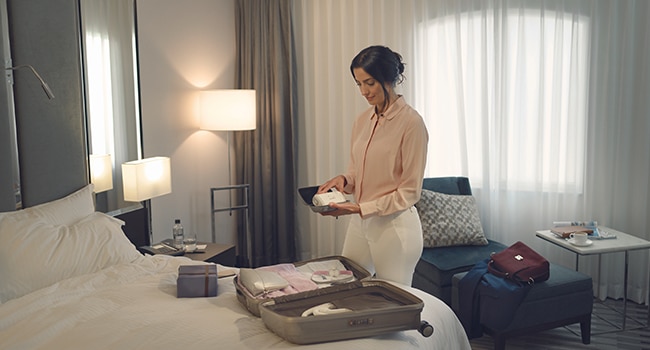
 Packing AirMini for travel

Take your CPAP when travelling

Whether you’re visiting family, taking a city break or heading abroad, bringing your CPAP equipment can help you maintain your treatment routine. For added convenience on the go, consider AirMiniTM, our travel-friendly CPAP device.

Keep a regular sleep schedule when possible

Going to bed and waking up at roughly the same time each day can help support healthy sleep patterns, even during busy periods.

Create a comfortable sleep environment

Keeping your bedroom cool, dark and quiet may make it easier to fall asleep and stay asleep during warmer weather.

Don’t worry about the occasional imperfect night

A late evening or disrupted night from time to time is part of life. Focus on returning to your usual sleep and therapy habits rather than trying to achieve perfection.

Enjoy summer while keeping sleep in mind

Summer is meant to be enjoyed. Late evenings, holidays and special occasions are all part of life, and occasional changes to your routine are completely normal.

If you’re using CPAP therapy, remember that both sleep duration and therapy use matter. Aim for enough sleep, use your CPAP throughout your sleep period whenever possible and return to healthy routines after the occasional disruption.

Over time, these habits can help you continue getting the most from your therapy and support your overall well-being.

Disclaimer:

This blog post contains general information about medical conditions and treatments. It is not intended to be a substitute for professional medical advice, diagnosis or treatment. The information is not advice, and should not be treated as such. You must not rely on the information on this website as an alternative to medical advice from your doctor or other professional healthcare provider. 

 If you have any specific questions about any medical matter, you should consult your doctor or other professional healthcare provider. If you think you may be suffering from any medical condition, you should seek immediate medical attention. You should never delay seeking medical advice, disregard medical advice, or discontinue medical treatment because of information on this website. The views expressed on this blog and website have no relation to those of any academic, hospital, practice, or other institution with which the authors are affiliated and do not directly reflect the views of Resmed or any of its subsidiaries or affiliates.

An image displayed on this page was generated using artificial intelligence (AI) and is intended for illustrative purposes only. It may not accurately represent actual products, services, individuals, locations, or events and should not be considered a factual or documentary representation.

References:
  1. Watson NF, et al. Recommended Amount of Sleep for a Healthy Adult: A Joint Consensus Statement of the American Academy of Sleep Medicine and Sleep Research Society. Sleep. 2015;38(6):843–844.
  2. Wallace ML, et al. Association of Sleep Duration and Mortality in Adults With Obstructive Sleep Apnea. JAMA Network Open. 2023;6(12):e2346327.
  3. Pépin JL, et al. How many hours per night is enough? A systematic integrative review of CPAP adherence metrics. Sleep Medicine Reviews. 2024;76:101967.
  4. Kohler M, et al. Effects of Continuous Positive Airway Pressure Therapy Withdrawal in Patients With Obstructive Sleep Apnea. American Journal of Respiratory and Critical Care Medicine. 2011;184(10):1192–1199.

Get the latest from Resmed

Stay connected and you will be among the first to hear all the latest news and developments.

Please answer the question above

Please answer the question above

By signing up, you agree to our Terms, Privacy Policy, and to receive marketing updates from Resmed.