



Snoring: What causes it? | Resmed UK
What can we help you find?
Search for masks, machines, accessories...

Snoring: Causes, symptoms and solutions

Sleep Health Dry Mouth Fatigue Snoring

Snoring is a common nighttime occurrence that happens while you sleep.1 Some people snore gently, like a purring cat. Others may sound more like a rattling chainsaw when they snore, disrupting sleep for both the person snoring and their bed partner. So, why do you snore? In some cases, snoring can be completely harmless. In other instances, it may be a sign of a more serious medical condition like sleep apnoea2, making it even more important to understand the cause behind your snoring.

 man snoring at night

What snoring could signal about your health

Snoring isn’t just an annoying sound, it may be a sign of underlying health issues. In some cases, snoring may indicate sleep apnoea or other conditions that affect your breathing and overall well-being. Here are some related signs to watch for3:

  • Loud snoring that disrupts sleep
  • Gasping for air during sleep
  • Waking up with a dry mouth or sore throat
  • Excessive daytime sleepiness
  • Difficulty concentrating

What causes snoring?

Snoring can be caused by a variety of lifestyle and/or natural, anatomical factors. Snoring causes include1:

  • Airway obstruction: Enlarged tonsils or a large uvula (the small, punching bag-shaped tissue that dangles from the back of the soft palette in your mouth) can cause an obstruction that causes you to snore.
  • Nasal problems: Persistent nasal congestion or a deviated nasal septum (a crooked partition between the nostrils) can make snoring more likely.
  • Alcohol use: Drinking alcohol – especially before bed – can relax your throat muscles too much and slow down your body’s natural wake-up signals. Alcohol consumption can relax the muscles in the throat, making the airway more prone to partial obstruction
  • Sleeping position: Your sleeping position can also play a role in whether you snore or not. Sleeping on your back can cause you to snore more than other positions.

Why do I snore? Understanding personal triggers for snoring

From your unique body type to your lifestyle choices, every person is different. While there are more general reasons behind snoring, the bigger question to ask yourself is “Why do I snore?” Taking stock of your body type, allergies, habits and overall health can help you pinpoint personal triggers behind your snoring.1

You can use a journal or app to log your behaviours to help you figure out possible triggers for your snoring. This can be helpful to share with your doctor to better understand the problem and how to solve it together.

Why does my bed partner snore?

If your bed partner snores loudly, it can disturb your sleep, and potentially put a strain on your relationship.4 Snoring can be caused by various factors such as sleeping position, allergies, sleep patterns, health issues and lifestyle choices such as alcohol use and smoking.1 Dealing with a snoring bed partner can be frustrating, but working together can help you both find a way to improve your sleep, energy, health and quality of life.

Snoring and sleep apnoea symptoms: Are they linked?

Just because you snore doesn’t necessarily mean that you have sleep apnoea. However, snoring regularly can be a potential sign of obstructive sleep apnoea. Other tell-tale signs of sleep apnoea include pauses in breathing and gasping for air while sleeping. While snoring can be annoying for both you and your bed partner, it should prompt you to talk to your doctor about sleep apnoea.

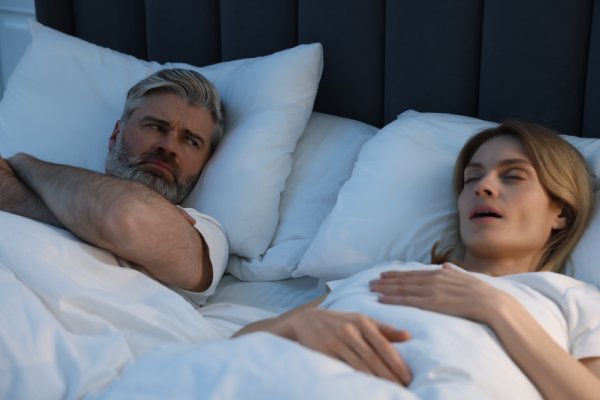
 woman snoring in bed

How to stop snoring: Effective solutions

Some common ways to stop snoring involve lifestyle changes.2 Adjusting your sleeping position is a small-but-simple change that can reduce your snoring. For instance, if you normally sleep on your back, sleeping on your side may help you stop snoring.

Other lifestyle changes that may help you stop snoring include avoiding alcohol and smoking. If you often find yourself reaching for a glass of wine or beer to unwind before bedtime, saying “no” to that nightly drink may help reduce your snoring. Getting more exercise and losing weight can also have a positive impact on your snoring. Weight loss can reduce the amount of fatty tissue around your neck and airways. As an added bonus, exercise can aid weight loss and help reduce bodily fluids that put pressure on your upper airway when you sleep.2

When should you see a doctor about snoring?

If you’ve tried any combination or all of the tips we’ve mentioned and still see no improvement in your snoring–or if it’s getting worse–visit your doctor to get checked for sleep apnoea.3 If your snoring is loud, frequent or you find yourself waking up short of breath, your doctor can help you determine whether your snoring is a symptom of a more serious condition like sleep apnoea. No matter the cause of your snoring, getting to the root of the problem can help you — and your sleep partner — have a more restful night’s sleep and wake up with more energy to face your day.

Do you or your bed partner snore?

Take our online sleep assessment and discuss the results with your doctor.

This blog post contains general information about medical conditions and treatments. It is not intended to be a substitute for professional medical advice, diagnosis or treatment. The information is not advice, and should not be treated as such. You must not rely on the information on this website as an alternative to medical advice from your doctor or other professional healthcare provider.

If you have any specific questions about any medical matter, you should consult your doctor or other professional healthcare provider. If you think you may be suffering from any medical condition, you should seek immediate medical attention. You should never delay seeking medical advice, disregard medical advice, or discontinue medical treatment because of information on this website. The views expressed on this blog and website have no relation to those of any academic, hospital, practice, or other institution with which the authors are affiliated and do not directly reflect the views of Resmed or any of its subsidiaries or affiliates.

References:
  1. “Snoring – Symptoms and Causes.” Mayo Clinic, https://www.mayoclinic.org/diseases-conditions/snoring/symptoms-causes/syc-20377694.
  2. “Snoring – Diagnosis and Treatment” – Mayo Clinic. https://www.mayoclinic.org/diseases-conditions/snoring/diagnosis-treatment/drc-20377701.
  3. “Sleep Apnea – Symptoms” | NHLBI, NIH. 9 Jan. 2025, https://www.nhlbi.nih.gov/health/sleep-apnea/symptoms.
  4. “World Sleep Day 2025 Report.” Resmed, https://document.resmed.com/documents/global/resmed-wsd-2025-report.pdf.

Get the latest from Resmed

Stay connected and you will be among the first to hear all the latest news and developments.

Please answer the question above

Please answer the question above

By signing up, you agree to our Terms, Privacy Policy, and to receive marketing updates from Resmed.