



Can Losing Weight Cure Sleep Apneoa? | Resmed UK
What can we help you find?
Search for masks, machines, accessories...

Can Losing Weight Cure Sleep Apnoea

Sleep Health Fatigue Sleep issues Snoring

There are many risk factors for sleep apnoea, including excess weight.1 But can losing a few pounds help reduce your symptoms or even cure your sleep apnoea? We’ve answered some of your burning questions on sleep apnoea and weight loss.

What is sleep apnoea?

Sleep apnoea is a common condition that causes lapses in your breathing while you rest.2 These lapses prevent your body from getting enough oxygen. To help you start breathing again, your brain sends a signal to wake up and breathe. This repeated cycle can leave you feeling exhausted even after a full night of sleep.

How sleep apnoea impacts your health

Sleep apnoea can lead to several health problems. For example, research has found links between this condition and the development of Type 2 diabetes.3 When you get too little sleep, it’s harder for your body to use insulin properly. At the same time, sleep apnoea can also make your body release more of a hormone called “ghrelin.”4 Ghrelin makes you crave sweets and carbs, increasing your risk of obesity. Obesity can not only make sleep apnoea worse but also contribute to the development of Type 2 diabetes. If you have sleep apnoea, you may also have irregular liver function.5 Your liver may even show signs of scarring.

Sleep apnoea also puts you at a higher risk of developing metabolic syndrome.6 This common condition, which is associated with high blood sugar levels, high blood pressure and abnormal cholesterol levels, makes you more likely to suffer from cardiovascular disease. The sudden drops in oxygen levels during sleep put a significant amount of stress on your heart. If you already have heart disease, sleep apnoea can make it worse.7

How is sleep apnoea linked to obesity?

Obesity is commonly associated with sleep apnoea, and untreated sleep apnoea may contribute to weight gain.8 In fact, people who are sleep-deprived may consume up to an additional 385 calories per day compared to people who receive adequate sleep,9 while studies have found an association between better sleep and greater weight loss.10, 11

The role of excess weight

Excess weight can increase your chances of developing obstructive sleep apnoea.12 Having more fatty tissue8 around your neck, chest and upper airways means that when your body relaxes during sleep, your breathing can become obstructed.

Excess weight also reduces lung capacity and may lead to respiratory compromise. Your entire body can have higher rates of inflammation if you have excess weight13, further impacting your breathing.

Statistics on obesity and sleep apnoea

Researchers believe up to 1 billion adults aged 30–69 years (men and women) have mild to severe obstructive sleep apnoea.14

Sleep apnoea affects roughly one in three middle-aged adults in the U.S.14 In the U.S., more than 50 million adults live with obstructive sleep apnoea (OSA), and that number is projected to reach nearly 77 million by 2050.15 Yet, up to 80% of cases remain undiagnosed.16

According to the Journal of Clinical Sleep Medicine17, about 62% of men with obesity and 20% of women with obesity have moderate to severe OSA. The American Heart Association18 also states that about 70% of all people who have obstructive sleep apnoea are living with obesity.

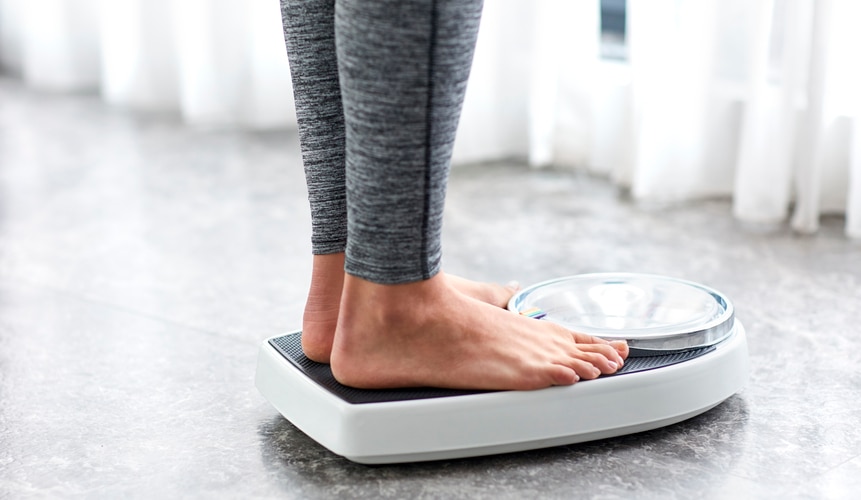
 monitoring weight via scale

Does losing weight help sleep apnoea?

So, can sleep apnoea be cured by losing weight? Reduction of weight can, for some people, lower the risk or severity of obstructive sleep apnoea.19 Weight management is always recommended as a complementary treatment for obesity-related sleep apnoea.

The role of fat reduction in airway function

Because a higher percentage of body fat is associated with lower lung functionality and restricted airways20, losing weight can help ease sleep apnoea symptoms. Weight loss can reduce fatty tissue around the throat, making it easier to keep your airways open while you sleep. It can even reduce tongue size21, which plays an important role in helping you breathe while sleeping.

The limitations of weight loss alone

Weight is not the only reason for this disorder, so weight loss alone is not a cure for sleep apnoea. Even if your symptoms improve, other underlying causes could be contributing to the condition. For example, having a naturally narrower throat could leave you struggling with sleep apnoea despite your weight loss.

 A Couple eating a healthy meal

Can dieting help my sleep apnoea?

While it’s always good to eat a healthy diet, it won’t directly help your sleep apnoea.22 However, healthy eating can lead to weight loss, which may reduce the size of your neck circumference and decrease the amount of pressure needed to keep your upper airway open. A nutritious diet can also give you more energy for exercise, which may help you maintain a healthy weight.

If my sleep apnoea symptoms have been reduced by weight loss, can I skip CPAP therapy?

Maintaining a healthy weight may lower your risk of developing many health conditions23, but it is not a cure for sleep apnoea. You should not stop your CPAP therapy without first talking to your doctor. CPAP is highly effective and is the most used and understood method of treating sleep apnoea.24 Combining CPAP with weight-loss intervention does not only reduce inflammation, but together, they help control blood sugar, cholesterol and blood pressure.25

 Couple playing cornhole

How weight loss and a healthy lifestyle may improve sleep apnoea symptoms

Eating right, exercising and getting quality sleep are part of a healthy lifestyle that can help you reach a healthy weight. While it may not cure your sleep apnoea, maintaining a healthy weight may reduce your symptoms.

There are a variety of apps that can help you track your diet, exercise and even your sleep.

Effective weight loss strategies

Reaching sustainable weight loss goals requires a mix of strategies. This can include changes to your diet and regular exercise. In some instances, when typical weight loss methods don’t work and you’re struggling to lose weight, working with professional nutritionists, dieticians, a personal trainer and–of course–your doctor can help you carve out a healthy weight management plan.

Dietary changes

One of the most profound lifestyle changes that can help you lose weight is to make changes to what you eat. Start by reducing your consumption of sugar, saturated fats, and refined carbohydrates and increasing your intake of vegetables, fruits, and lean proteins. A few small changes–like swapping soda and sugary drinks for water–can go a long way toward helping you achieve your weight loss goals.

Regular exercise

Exercise helps you burn calories, and creating a caloric deficit can lead to weight loss. Building muscle helps you continue burning calories even while resting, and aerobic exercise can strengthen both your heart and your lungs.

Realistic goal setting

If you’re on a weight loss journey to reduce the severity of your sleep apnoea and improve your overall health, be gentle with yourself and set realistic weight goals. If your goals are too aggressive and you push yourself too hard to lose weight too soon, you might lose motivation if you’re not reaching your goals. Enlisting the aid of a personal trainer or a nutritionist can help you set achievable goals based on your age, activity levels and overall health.

Alternatives to weight loss in sleep apnoea treatment

Sleep apnoea and weight are connected, but losing a few pounds might not necessarily give you relief from sleep apnoea symptoms. However, there are other options you can consider, ranging from lifestyle changes to well-trusted sleep apnoea treatment.

Sleep apnoea treatment options

Continuous positive airway pressure (CPAP) therapy is one of the most widely used treatments for sleep apnoea. This therapy requires wearing a mask that helps keep your airways open while you sleep as it is connected to a CPAP device that provides constant pressure. This pressure keeps your tongue, uvula and soft palate from shifting back and obstructing your airway.

Other lifestyle changes

Making lifestyle changes can also reduce your sleep apnoea symptoms. Drinking alcohol, for example, can relax the muscles in your throat and airways, creating conditions that cause your airways to collapse and stop your breathing while you sleep.

If you’re a smoker, giving up your cigarette habit can have a positive impact on your sleep apnoea. Smoking increases inflammation and fluid retention in your airways, which only makes sleep apnoea worse. Aside from helping you sleep better, quitting smoking can help you improve your overall breathing and lung health.

Your sleeping positions can make a difference when it comes to sleep apnoea, too. Sleeping on your back can make it easier for your tongue and other muscles surrounding your airway to relax and obstruct the flow of air. Sleeping on your side may be a better option.

You should also try to maintain a consistent sleep schedule. Sticking to a nighttime routine can help regulate your sleep cycle and lead to better overall rest.

Concerned about your sleep health?

If you wake up exhausted after a full night’s rest or you find yourself gasping awake, you may have sleep apnoea. By taking our sleep assessment you might understand common sleep apnoea symptoms and know where to look for help. Are you ready?

Start the sleep assessment

This blog post contains general information about medical conditions and treatments. It is not intended to be a substitute for professional medical advice, diagnosis or treatment. The information is not advice, and should not be treated as such. You must not rely on the information on this website as an alternative to medical advice from your doctor or other professional healthcare provider.

If you have any specific questions about any medical matter, you should consult your doctor or other professional healthcare provider. If you think you may be suffering from any medical condition, you should seek immediate medical attention. You should never delay seeking medical advice, disregard medical advice, or discontinue medical treatment because of information on this website. The views expressed on this blog and website have no relation to those of any academic, hospital, practice, or other institution with which the authors are affiliated and do not directly reflect the views of Resmed or any of its subsidiaries or affiliates.

Resources:

  1. Gurubhagavatula I, et al., “Obstructive Sleep Apnea Indicator Report. American Academy of Sleep Medicine”, 2023
  2. Sleep Apnea – What Is Sleep Apnea? | NHLBI, NIH. 9 Jan. 2025, https://www.nhlbi.nih.gov/health/sleep-apnea.
  3. Doumit, Jimmy, and Bharati Prasad. “Sleep Apnea in Type 2 Diabetes.” Diabetes Spectrum: A Publication of the American Diabetes Association, vol. 29, no. 1, Feb. 2016, pp. 14–19. PubMed, https://doi.org/10.2337/diaspect.29.1.14.
  4. Mosavat, Maryam, et al. “The Role of Sleep Curtailment on Leptin Levels in Obesity and Diabetes Mellitus.” Obesity Facts, vol. 14, no. 2, Apr. 2021, pp. 214–21. PubMed Central, https://doi.org/10.1159/000514095.
  5. Ahmed, Mohamed H., and Christopher D. Byrne. “Obstructive Sleep Apnea Syndrome and Fatty Liver: Association or Causal Link?” World Journal of Gastroenterology : WJG, vol. 16, no. 34, Sep. 2010, pp. 4243–52. PubMed Central, https://doi.org/10.3748/wjg.v16.i34.4243.
  6. Kim, Do Hyun, et al. “The Relationship between Metabolic Syndrome and Obstructive Sleep Apnea Syndrome: A Nationwide Population-Based Study.” Scientific Reports, vol. 11, no. 1, Apr. 2021, p. 8751. www.nature.com, https://doi.org/10.1038/s41598-021-88233-4.
  7. American Heart Association, “Sleep Apnea and Heart Health”, 2023, https://www.heart.org/en/health-topics/sleep-disorders/sleep-apnea-and-heart-disease-stroke
  8. Deng, Hai, et al. “Association of Adiposity with Risk of Obstructive Sleep Apnea: A Population-Based Study.” BMC Public Health, vol. 23, no. 1, Sep. 2023, p. 1835. BioMed Central, https://doi.org/10.1186/s12889-023-16695-4.
  9. Al Khatib, H. K., et al. “The Effects of Partial Sleep Deprivation on Energy Balance: A Systematic Review and Meta-Analysis.” European Journal of Clinical Nutrition, vol. 71, no. 5, May 2017, pp. 614–24. PubMed, https://doi.org/10.1038/ejcn.2016.201.
  10. Kline, Christopher E., et al. “The Association between Sleep Health and Weight Change during a 12-Month Behavioral Weight Loss Intervention.” International Journal of Obesity (2005), vol. 45, no. 3, Mar. 2021, pp. 639–49. PubMed, https://doi.org/10.1038/s41366-020-00728-8.
  11. Chaput, Jean-Philippe, and Judy Shiau. “Routinely Assessing Patients’ Sleep Health Is Time Well Spent.” Preventive Medicine Reports, vol. 14, June 2019, p. 100851. PubMed, https://doi.org/10.1016/j.pmedr.2019.100851.
  12. Shah, Neeraj M., and Georgios Kaltsakas. “Respiratory Complications of Obesity: From Early Changes to Respiratory Failure.” Breathe, vol. 19, no. 1, Mar. 2023, p. 220263. DOI.org (Crossref), https://doi.org/10.1183/20734735.0263-2022.
  13. Rohm TV, Meier DT, Olefsky JM, Donath MY. Inflammation in obesity, diabetes, and related disorders. Immunity. 2022 Jan 11;55(1):31-55. doi: 10.1016/j.immuni.2021.12.013. PMID: 35021057; PMCID: PMC8773457.
  14. Benjafield, Adam V., et al. “Estimation of the Global Prevalence and Burden of Obstructive Sleep Apnoea: A Literature-Based Analysis.” The Lancet. Respiratory Medicine, vol. 7, no. 8, Aug. 2019, pp. 687–98. PubMed, https://doi.org/10.1016/S2213-2600(19)30198-5.
  15. Boers, Elroy et al.; Projecting the 30-year burden of obstructive sleep apnoea in the USA: a prospective modelling study; The Lancet Respiratory Medicine; published online ahead of issue publication August 26, 2025.
  16. T. Young, L. Evans, L. Finn and M. Palta, “Estimation of the Clinically Diagnosed Proportion of Sleep Apnea Syndrome in Middle-aged Men and Women,,” Sleep, vol. 20, no. 9, pp. 705-706, September 1997.
  17. Fattal, Deema, et al. “Body Weight and Obstructive Sleep Apnea: A Mathematical Relationship between Body Mass Index and Apnea-Hypopnea Index in Veterans.” Journal of Clinical Sleep Medicine, vol. 18, no. 12, Dec. 2022, pp. 2723–29. DOI.org (Crossref), https://doi.org/10.5664/jcsm.10190.
  18. Wolk, Robert, et al. “Obesity, Sleep Apnea, and Hypertension.” Hypertension, vol. 42, no. 6, Dec. 2003, pp. 1067–74. DOI.org (Crossref), https://doi.org/10.1161/01.HYP.0000101686.98973.A3.
  19. Kuna, Samuel T., et al. “Effects of Weight Loss on Obstructive Sleep Apnea Severity. Ten-Year Results of the Sleep AHEAD Study.” American Journal of Respiratory and Critical Care Medicine, vol. 203, no. 2, Jan. 2021, pp. 221–29. PubMed Central, https://doi.org/10.1164/rccm.201912-2511OC.
  20. Sutherland, Tim J. T., et al. “The Relationship between Body Fat and Respiratory Function in Young Adults.” European Respiratory Journal, vol. 48, no. 3, Sep. 2016, pp. 734–47. DOI.org (Crossref), https://doi.org/10.1183/13993003.02216-2015.
  21. Penn Medicine, “Losing tongue fat improves sleep”, 2020, https://www.pennmedicine.org/news/losing-tongue-fat-improves-sleep-apnea
  22. Schelbert, Kavitha Bhat. “Comorbidities of Obesity.” Primary Care: Clinics in Office Practice, vol. 36, no. 2, Jun. 2009, pp. 271–85. DOI.org (Crossref), https://doi.org/10.1016/j.pop.2009.01.009.
  23. “Maintaining a Healthy Weight.” National Institute on Aging, 7 Apr. 2022, https://www.nia.nih.gov/health/healthy-eating-nutrition-and-diet/maintaining-healthy-weight.
  24. Division of Sleep Medicine at Harvard Medical School, “Understanding PAP”, 2021, https://sleep.hms.harvard.edu/education-training/public-education/sleep-and-health-education-program/sleep-health-education-37.
  25. Chirinos, Julio A., et al. “CPAP, Weight Loss, or Both for Obstructive Sleep Apnea.” The New England Journal of Medicine, vol. 370, no. 24, Jun. 2014, pp. 2265–75. PubMed Central, https://doi.org/10.1056/NEJMoa1306187.

Get the latest from Resmed

Stay connected and you will be among the first to hear all the latest news and developments.

Please answer the question above

Please answer the question above

By signing up, you agree to our Terms, Privacy Policy, and to receive marketing updates from Resmed.