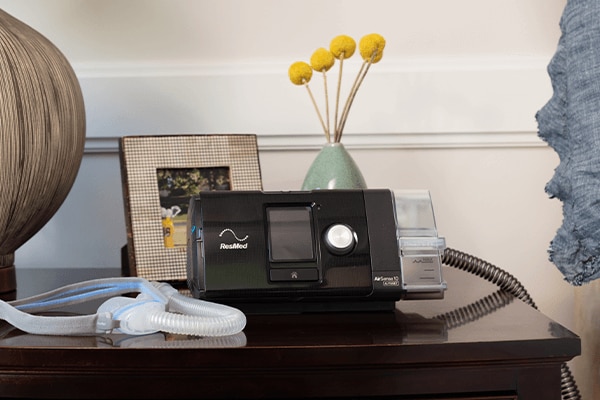
A CPAP machine does two main things, and the first leads on to the second:
1. It provides continuous positive airway pressure
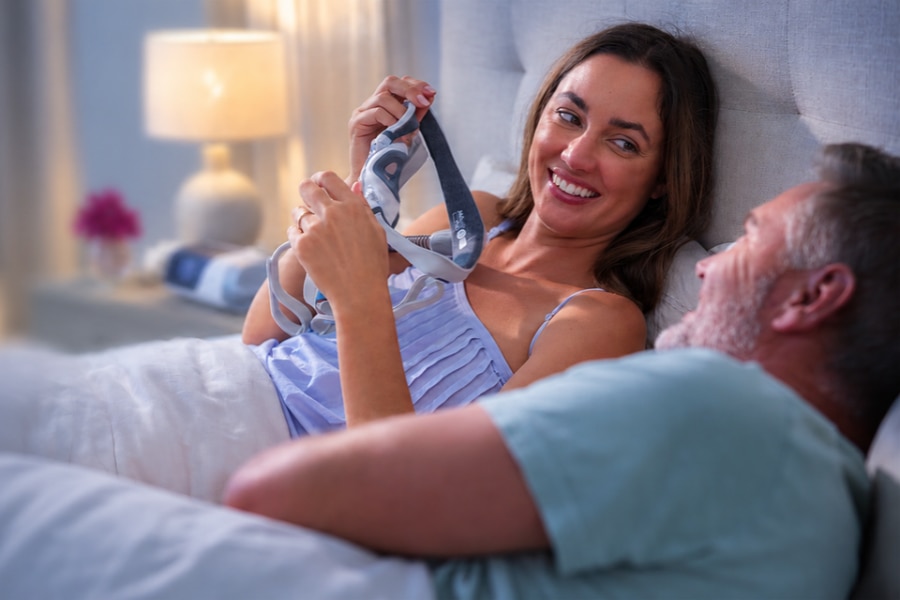
CPAP stands for continuous positive airway pressure, because that’s what it provides! What does this mean in practice? A CPAP device generates a steady stream of pressurised air, which you then breath in through a mask that you wear over your nose and mouth (or just your nose, see below for more on CPAP masks) as you sleep.
2. It helps your breathing as you sleep
The point of delivering this air is that it helps keeps your airway open as you sleep so you can breath more normally with fewer pauses, or apnoeas. The result? You should have a better night’s rest and feel less tired the next day.
3. Is a CPAP device the only option for treating OSA?
A CPAP machine has been described as the ‘gold standard’ treatment for people with sleep apnoea5, but there are other options you may want to discuss with your healthcare provider, depending on the severity of your OSA. For example in mild to moderate cases, OSA is sometimes treated with a ‘mandibular advancement device’ – this is a small oral appliance, like a sports mouthguard, that you wear at night to help reduce snoring and apnoeas11.
If you are overweight or living with obesity you may be encouraged to lose weight, as this can help ease OSA symptoms12. However if you have severe OSA, weight loss alone may not be enough to reduce your apnoeas without also having CPAP therapy.
In some cases, especially where OSA is being caused by a physical blockage in the upper airway, surgery may be an option, but as with all operations this comes with risks.