



Getting used to your MAD treatment
How long will it take to get used to your NarvalTM CC device?
Some people adapt very quickly. For others, it may take a few nights, sometimes a few weeks1.
Start using your Narval CC device with peace of mind thanks to the tips below, which will guide you through your first few nights.

Take your time and make yourself comfortable.
When you start treatment with your Narval CC, it is important to take it slowly, stay positive and remember that your body needs a little time to adjust.
Here are a few tips to get you started:
- First, try your device in the evening, when you are relaxed (while watching television, reading, etc.), for 30 minutes to an hour. This will allow you to get used to the sensation before bedtime.
- Put your device in and take it out in front of a mirror for the first few days to make sure it fits properly on your teeth.
- Maintain a small ritual (brushing your teeth, putting on the aligner, storing the case in the same place) to establish a reassuring routine.
The more comfortable you are with these actions during the day, the easier it will be when you go to bed. You will then gradually notice new sensations related to the aligner.
Getting used to new sensations
Narval CC is designed to move your lower jaw slightly forward to keep your airways more open while you sleep.
When you first start wearing the device, you may notice a new or unusual sensation in your mouth as you get used to it. This is common at the beginning of treatment and usually improves as you adapt over time.
A few tips:
- Breathe calmly when you put your orthotic device in, as you would normally do when awake.
- Keep it in your mouth for a few minutes longer each night if you find it a little uncomfortable at first2,3
- When you wake up, do some small jaw exercises to quickly return to your usual position.
If, despite these habits, some discomfort persists, a few simple checks by your dental specialist can help.

When to seek help?
After a few weeks, if your device fits properly, you should begin to feel the benefits: improved quality of life1, less snoring4 , less daytime sleepiness1.
Contact your dental practitioner and/or sleep specialist for a check-up if:
- Your symptoms of obstructive sleep apnoea or snoring persist (observed breathing interruptions, waking up during the night, significant fatigue upon waking);
- You experience significant or prolonged pain in your jaw, teeth, gums or temporomandibular joints
- Your device is damaged, cracked or deformed.
Never modify your Narval CC device yourself. If in doubt, remove it and seek advice from your practitioner.
Tools and advice to help you continue treatment
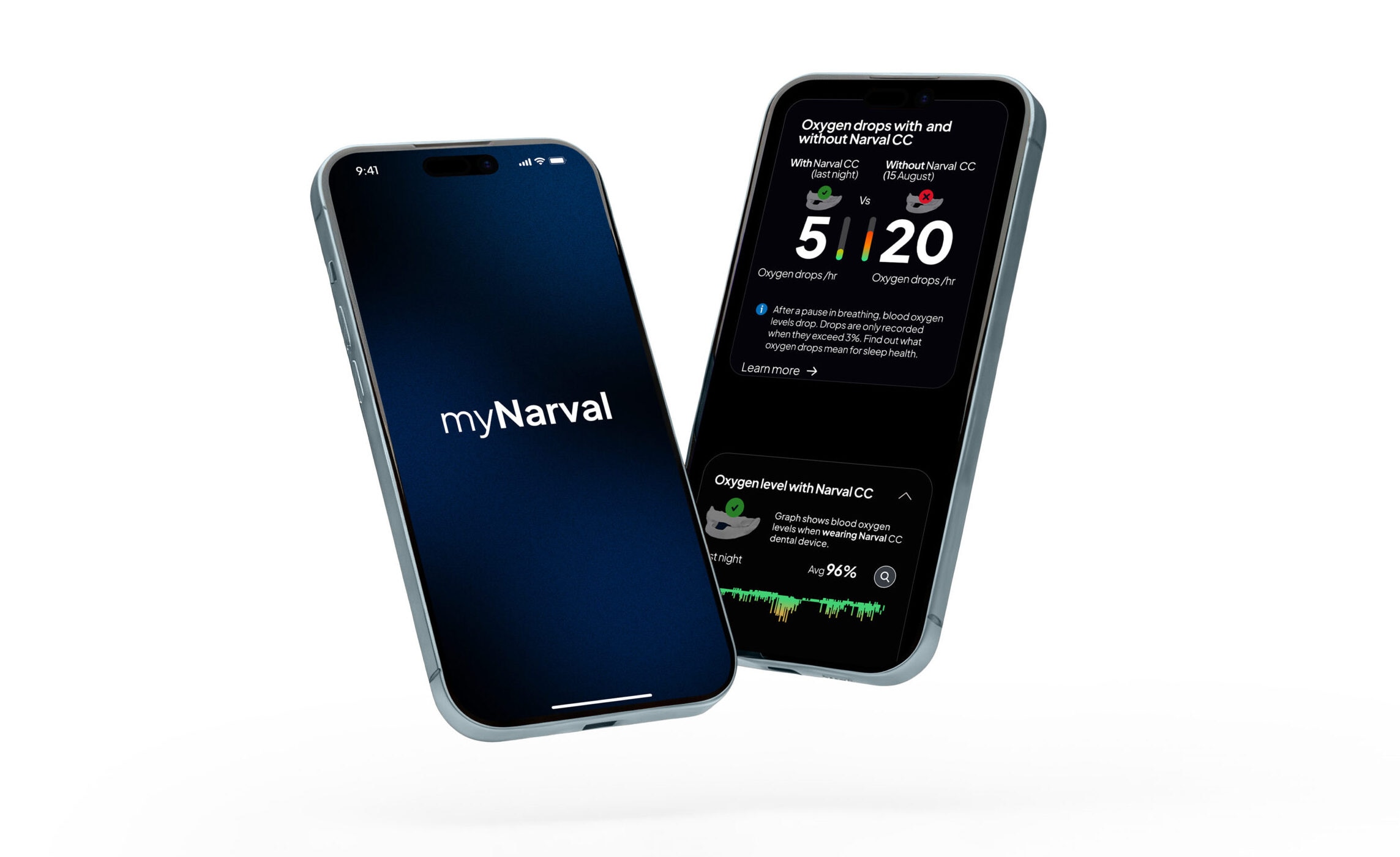
Follow your progress with myNarval
With myNarval, you can visualize your progress over time and receive personalized support to guide you throughout your treatment journey.

Travel with peace of mind
Whether you are going on holiday or travelling for work, your Narval CC device is easy to take with you: it is small and discreet!
References:
myNarval is not a medical device.
Please refer to the Narval CC Instructions for Use for important information regarding contraindications, warnings, and precautions to be taken before and during product use.
- Vecchierini MF, Attali V, Collet JM, et al. Mandibular advancement device use in obstructive sleep apnea: ORCADES study 5-year follow-up data. J Clin Sleep Med. 2021;17(8):1695-1705. doi:10.5664/jcsm.9308.
*A 5-year prospective observational multicentre cohort study on 331 OSA patients. 5-year follow-up data analysis. Clinical Trials.gov identifier: NCT01326143. - Attali V, Chaumereuil C, Arnulf I, Golmard JL, Tordjman F, Morin L, et al. Predictors of long-term effectiveness to mandibular repositioning device treatment in obstructive sleep apnea patients after 1000 days. Sleep Medicine. 2016 Nov;27–28:107–14.
- Martins ODFM, Chaves Junior CM, Rossi RRP, Cunali PA, Dal-Fabbro C, Bittencourt L. Side effects of mandibular advancement splints for the treatment of snoring and obstructive sleep apnea: a systematic review. Dental Press J Orthod. 2018 Aug;23(4):45–54.
- Attali V & al. Efficacy and tolerability of a custom-made Narval mandibular advancement device for the treatment of obstructive sleep apnea: ORCADES study 2-year follow-up data. Sleep Med. 2019 Nov;63:64-74.
*A 5-year prospective observational multicentre cohort study on 331 OSA patients. 2-year follow-up data analysis. Clinical Trials.gov identifier: NCT01326143.