Tips and tricks for travelling with your CPAP machine | Resmed UK
What can we help you find?
Search for masks, machines, accessories...

Tips and tricks for travelling with your CPAP machine

CPAP & Therapy Seasonal Travel with CPAP

Travelling should be about discovery, relaxation, and new experiences — not worrying about your sleep therapy. If you use CPAP therapy, the good news is that you don’t have to press pause on your treatment when you’re away from home. With the right preparation and the accessories, you can stay consistent, comfortable, and well-rested wherever you go.

This article walks you through everything you need to know before you travel, what to pack, and how products like AirMini™, travel bags, and power solutions can make your journey smoother. Whether you’re a beginner or an experienced CPAP user, the goal is simple: help you travel confidently while staying committed to your therapy.

What to think about before you travel

A little planning goes a long way when travelling with your CPAP machine. Before you leave, make sure you have the following essentials ready:

Medical documentation

It’s always a good idea to have a few key medical documents ready when you travel:

  • A doctor’s letter confirming your need for PAP therapy
  • Your therapy details (pressure, mask type and size)
  • Contact details for your doctor, equipment supplier and care provider
  • Health insurance information, including policy number
  • Resmed’s FAA Air Travel Compliance Letter for airport security

If you’re flying, contact your airline at least two weeks in advance to confirm whether you can use your device onboard, and keep a copy of their approval with you. For overnight travel in other modes (such as trains or cruises), it’s also worth checking in advance that you’ll have access to a power source.

Why maintaining therapy matters – even on holiday

When you’re away from home, it can be tempting to skip your CPAP therapy for a few nights. However, even short breaks can affect your sleep quality and how you feel during the day. Poor sleep can lead to fatigue, reduced concentration, and a lower ability to enjoy your trip.1

Staying consistent with therapy helps you wake up refreshed and ready to make the most of your time away. With today’s travel-friendly solutions, maintaining your routine is more manageable than ever.

Travel-friendly CPAP solutions

A device designed for travel: AirMini

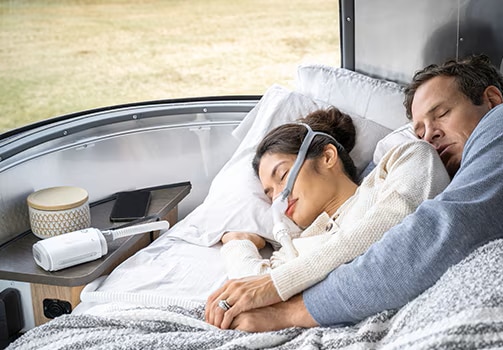
If you travel regularly — or simply want a more convenient option — AirMini is designed specifically for life on the move. Unlike traditional CPAP machines, it is compact and lightweight, making it easy to fit into your luggage or carry-on bag without adding bulk.

One of its standout features is waterless humidification. This allows you to enjoy the comfort of humidified air without the need to carry distilled water, which can be particularly useful when flying or travelling to destinations where access to clean water is uncertain.

AirMini is a good option for short breaks, business trips, and longer holidays alike. It simplifies your setup while still supporting effective therapy, making it easier to stay consistent wherever you are.

Keeping everything organised

A dedicated travel bag for your CPAP device can make your journey significantly smoother. Instead of packing your equipment across different compartments, a purpose-designed bag keeps everything in one place and protects your device during transit. It also makes airport security easier, as you can quickly access your equipment when needed.

Having a proper travel bag whether for your standard CPAP or for AirMini — adds both convenience and peace of mind.

Staying powered wherever you go

Access to power can vary depending on your destination. That’s why having flexible charging options is critical.

DC-DC converter:

A DC-DC converter can be especially useful if you’re travelling by car, campervan, or boat. It allows you to connect your CPAP device to a vehicle’s 12V or 24V power outlet, giving you flexibility in environments where traditional power sources aren’t available. For many travellers, this accessory opens up new possibilities, from road trips to more remote adventures.

Power adapters:

If you’re travelling internationally, you’ll also need the correct plug adapter for your destination. Power outlets vary from country to country, and having the right adapter ensures you can use your device without interruption.

Extension cord:

Hotel rooms don’t always have conveniently placed outlets. A small extension cord ensures you can set up your device comfortably near your bed, without having to rearrange furniture or compromise on your setup.

Keeping your equipment clean on the go

Maintaining hygiene while travelling is essential, particularly in warmer climates where bacteria can develop more quickly. While you may not always have access to running water or time for a full cleaning routine, there are simple ways to stay on top of it.

Travel-sized CPAP mask wipes are a practical solution. They allow you to clean your mask quickly and effectively, even when you’re on the move. Keeping your equipment clean not only supports your health but also helps maintain the performance of your therapy.

Bringing a few extras for peace of mind

When you’re far from home, it’s reassuring to know you have backups if needed. Packing a few spare parts can make a big difference if something needs replacing unexpectedly.

Spare mask parts (cushion, headgear, tubing):

Small and easy to pack, these can save your trip if something needs replacing. A spare cushion is particularly helpful for maintaining a good seal and comfort, especially if yours wears out or gets damaged. Extra headgear and tubing give you added flexibility if you can’t wash and dry them daily.

Extra CPAP filters:

Extra CPAP filters are important when travelling in dusty environments or sleeping outdoors, where there may be higher levels of dust, pollen, and allergens. Bringing spare filters helps maintain clean airflow, supports effective therapy, and ensures your device continues to perform at its best throughout your trip.


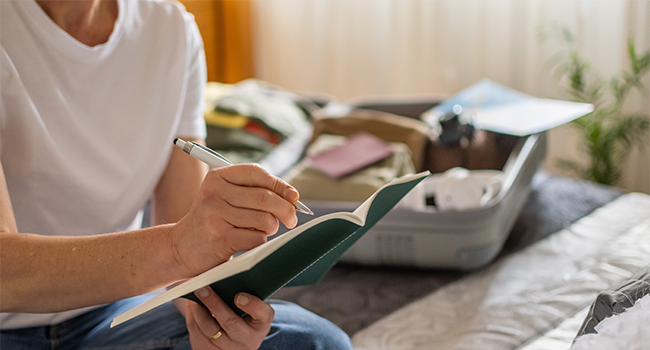
 Traveler preparing a packing checklist next to an open suitcase, ensuring CPAP device and essentials are ready for a stress-free journey

6 Practical tips for travelling with CPAP

Travelling with your CPAP doesn’t have to feel complicated. With a bit of planning, you can stay comfortable, keep your therapy consistent, and focus on enjoying your trip, whether you’re heading to a hotel, visiting family, or sleeping under the stars.

1. Plan your humidification needs

In hot, cold, or dry climates, humidification can significantly improve comfort and help prevent dryness. If your device uses a humidifier, make sure you have access to safe water, especially in areas where tap water may not be suitable. Carrying a water bottle can make this easier while you’re on the move.

2. Adapt your packing checklist to your destination

Where you’re going should shape what you bring. A weekend in a city hotel is very different from camping or van travel, where dust and allergens can be higher. In those cases, extra filters become especially important, and a DC-DC converter can be useful depending on your power source. If you’re travelling internationally, don’t forget a plug adapter so your device works seamlessly wherever you are.

3. Bring your CPAP onboard with confidence

In most regions, including Europe and the US, CPAP devices are considered medical equipment and typically don’t count towards carry-on limits2. Bringing it onboard ensures your therapy is always within reach while helping protect it from damage or delays during transit.

4. Be prepared for security and language barriers

If you’re travelling internationally, you might be asked about your device at security or during your stay. Having a translation of “medical device” saved on your phone, or even a small label on your CPAP, can make these interactions smoother and less stressful.

5. Stay consistent with your routine

Travel often disrupts your schedule, but your CPAP routine shouldn’t be one of those things. Using your device every night, even on short trips, helps you maintain the quality of your sleep and feel your best throughout your journey. Sticking as closely as possible to your usual bedtime can also make it easier to adjust and avoid unnecessary fatigue.

6. A simple CPAP travel

Before you leave — and again before you head home — it helps to run through a quick checklist so nothing important gets left behind, especially for beginners. This is not an exhaustive list, but it covers the essentials to get you started:

✔️ Medical documentation

✔️  CPAP device and mask

✔️  Power supply / cables

✔️  Travel bags

✔️  Tubing

✔️  Spare mask parts (cushion, headgear)

✔️  Cleaning essentials

✔️  Filters (especially for outdoor environments)

✔️  Humidifier and water (if needed)

✔️  Travel adapter (for international trips)

✔️  Extension cord

✔️  Device label

Travel with confidence

Travelling with CPAP becomes much easier when your setup is tailored to your needs. With the right preparation and equipment, even new CPAP users can travel confidently, knowing your therapy will continue to support you wherever you go.

Whether it’s a weekend getaway or a long-haul journey, solutions like AirMini, CPAP travel bags, and reliable power options can make all the difference.  With a few simple CPAP tips, you can stay comfortable and consistent throughout your journey.

Disclaimer:

PROMOTIONAL MATERIAL – CE-marked medical devices (CE0123). Manufacturer: Resmed. Local contact: Resmed. Please refer to the instructions for use for relevant information related to any contraindications, warnings and precautions.

This blog post contains general information about medical conditions and treatments. It is not intended to be a substitute for professional medical advice, diagnosis or treatment. The information is not advice, and should not be treated as such. You must not rely on the information on this website as an alternative to medical advice from your doctor or other professional healthcare provider.

 If you have any specific questions about any medical matter, you should consult your doctor or other professional healthcare provider. If you think you may be suffering from any medical condition, you should seek immediate medical attention. You should never delay seeking medical advice, disregard medical advice, or discontinue medical treatment because of information on this website. The views expressed on this blog and website have no relation to those of any academic, hospital, practice, or other institution with which the authors are affiliated and do not directly reflect the views of ResMed or any of its subsidiaries or affiliates.

References:
  1. Kribbs, N. B., J. R. Pack, L. R. Kline, T. R. Getsy, A. Schuett, J. Henry, R. Maislin and A. I. Pack. Effects of One Night without Nasal CPAP Treatment on Sleep and Sleepiness. American Journal of Respiratory and Critical Care Medicine. https://academic.oup.com/ajrccm/article/147/5/1162/8556444
  2. Summer, Jay. Does a CPAP Machine Count as a Carry-On? Sleep Foundation. https://www.sleepfoundation.org/cpap/does-a-cpap-machine-count-as-a-carry-on (consulted on 11 May 2026)

Get the latest from Resmed

Stay connected and you will be among the first to hear all the latest news and developments.

Please answer the question above

Please answer the question above

By signing up, you agree to our Terms, Privacy Policy, and to receive marketing updates from Resmed.