




ASV offers clinical benefits*
Compared to other forms of PAP therapy, ASV offers significant benefits for the treatment of central SDB* – including improvement of AHI, reduction of respiratory events and alleviation of daytime sleepiness.
Who is ASV* therapy suitable for?
Any patient with Left Ventricular Ejection Fraction (LVEF)>45% is eligible for ASV.1,2,3,4
Reduced LVEF should be excluded before starting ASV.1 Before using ASV, it is important to ensure that LVEF is >45%. Echocardiography13 is recommended for this purpose.
Experts’ statements1,2,3,4 and healthcare authorities agree that patients with LVEF>45% remain eligible for ASV when there is a clinical rationale for using it. ASV is eligible in these different situations1,2,3,4
The 2025 AASM Guidelines and the latest ERS Statement on ASV12 recommend considering ASV therapy for patients with:
- Idiopathic central sleep apnea (CSA)
- Drug‑induced CSA
- Treatment‑emergent CSA (TECSA)
- CSA associated with medical or neurological disorders
- CSA in heart failure*
- Predominant obstructive sleep apnea (OSA) when CPAP is insufficient.
Find out more about the Resmed device that uses ASV therapy: AirCurve 10 CS PaceWave.
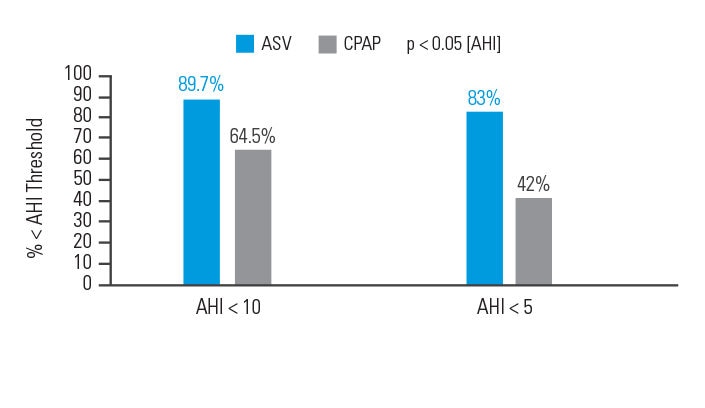
ASV better than CPAP at controlling respiratory events in patients with CompSA
In an intention-to-treat analysis, success (apnoea hypopnoea index [AHI] < 10) at 90 days of therapy was achieved in 89.7% of patients treated with ASV versus 64.5% of participants treated with CPAP.6
[N = 66, prospective randomised trial]
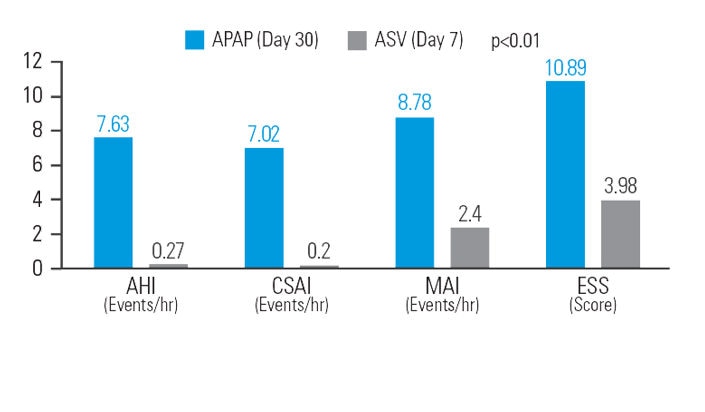
ASV decreases residual sleepiness after APAP therapy in patients with mixed sleep apnoea
After 30 days of APAP treatment, ASV provided a further reduction (compared to baseline) of 12.9% in AHI, 48.5% in central sleep apnoea index (CSAI), 26.1% in micro-arousal index (MAI), and 37.9% in Epworth Sleepiness Scale (ESS) score at similar mean pressure.7
[N = 42, sequential study]
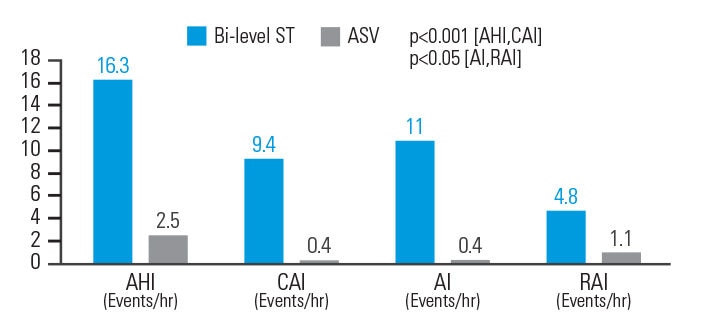
ASV better than bi-level ST at reducing respiratory events in opioid-induced CSA
In opioid-induced CSA, ASV therapy reduced AHI by 84.7%, central apnoea index (CAI) by 95.7%, Apnoea Index (AI) by 96.4%, and respiratory arousal index (RAI) by 77.1% when compared to bi-level ST. Respiratory parameters were normalised in 83.3% of patients on ASVAuto but only 33.3% of patients on bi-level ST.8
[N = 18, prospective, randomised crossover polysomnography study]
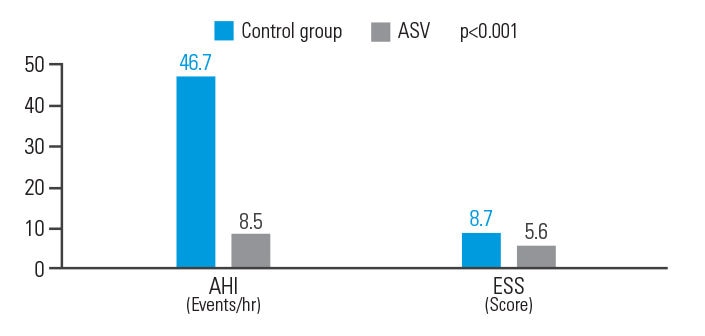
ASV improves AHI and ESS in post-acute ischemic stroke patients
ASV therapy improved outcomes for post-acute ischemic stroke patients with CSA, reducing AHI by 81.8% and ESS by 35.6%.9
[N = 15, single centre retrospective analysis]
ASV improves cardiac output and prognosis in heart failure with preserved ejection fraction*
Prospective randomised and observational heart failure studies (already presented and shortly to be published) have suggested that ASV may be beneficial in heart failure patients with preserved ejection fraction and in those who have CSA with coexisting obstructive sleep apnoea.10 Currently there is no evidence that these patients would be at any risk of harm from ASV therapy.
ASV clinical studies
FACIL-VAA Study
The FACIL‑VAA study is a French multicenter observational cohort that includes patients with central sleep apnea syndrome or combined sleep apnea with predominant central events, all treated with adaptive servo‑ventilation (VAA). Importantly, the study involves devices from all three major manufacturers, providing a comprehensive and real‑world evaluation of ASV therapy across different technologies.

FACE study
The FACE study will provide long-term data on morbidity and mortality of heart failure (both HFrEF and HFpEF) patients using ASV.

CSA during CPAP therapy study
Switching patients with persistent or emergent CSA from CPAP to ASV may improve compliance.
ASV videos: watch experts talking about ASV therapy.
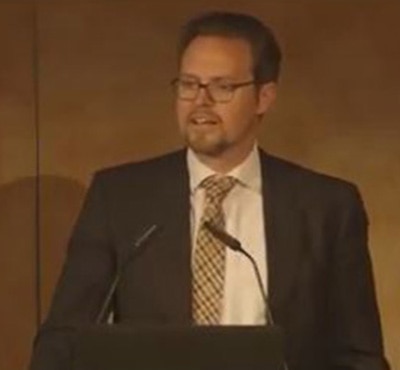
Prof. Michael Artz talks about clinical case of ASV in a patient with heart failure and preserved ejection fraction
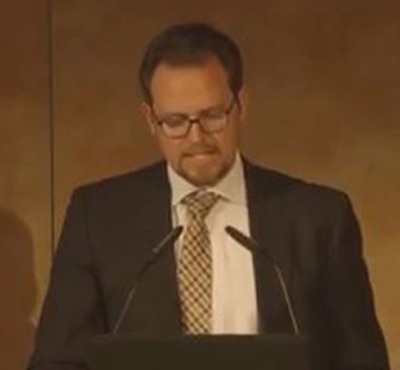
Professor Michael Arzt. Clinical case of Sleep Disordered Breathing in a patient with Heart Failure and reduced Ejection Fraction ( HFrEF)
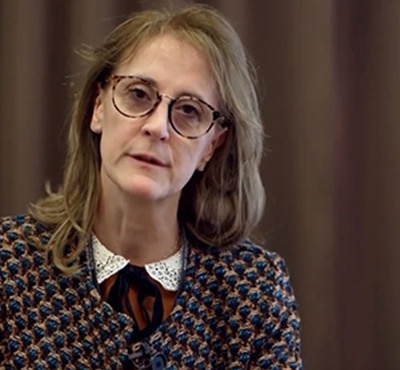
Prof. Marie-Pia d’Ortho talks about central sleep apnoea management
Prof. Marie-Pia d’Ortho talks about SDB management with ASV therapy
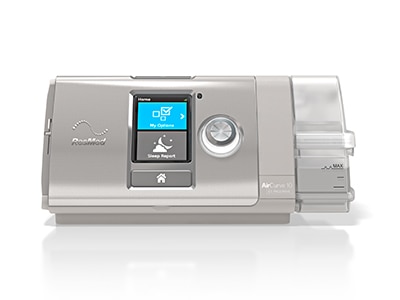
How to treat your patients with central sleep apnoea?
Discover how Resmed Adaptive Servo-Ventilation (ASV)* solution promotes harmony, safety and comfort.
More about treatment options

Treatment options for CSA
It can be challenging to treat patients with central sleep apnoea. Learn more about CSA treatment options.
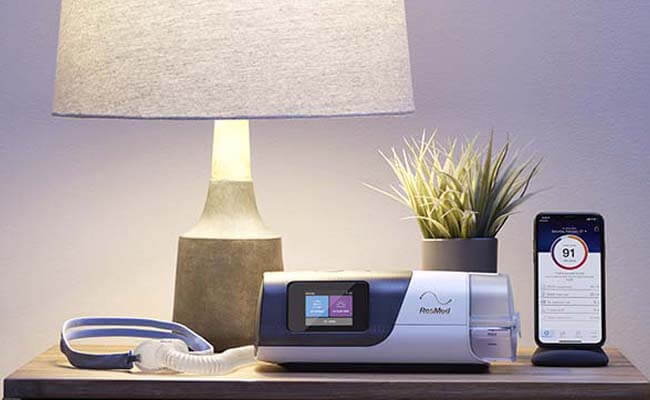
Treatment options for OSA
Resmed helps you to guide your patient to the best and appropriate OSA treatment options available. These include CPAP, PAP, APAP, bilevel therapy and oral appliance therapy.
This content is intended for health professionals only.
Please refer to the user (and clinical – if applicable) guides for relevant information related to any contraindications, warnings and precautions to be considered before and during use of the products.
References:
* ASV therapy is contraindicated in patients with chronic, symptomatic heart failure (NYHA 2-4) with reduced left ventricular ejection fraction (LVEF ≤ 45%) and moderate to severe predominant central sleep apnoea .
- d’Ortho et al. European Respiratory & Pulmonary Diseases, 2016;2(1):Epub ahead of print. http://doi.org/10.17925/ERPD.2016.02.01.1.
- Priou P & al. Adaptive servo-ventilation: How does it fit into the treatment of central sleep apnoea syndrome? Expert opinions. Revue des Maladies Respiratoires, 2015 Dec, 32(10):1072-81.
- Aurora RN & al. Updated Adaptive Servo-Ventilation Recommendations for the 2012 AASM Guideline: “The Treatment of Central Sleep Apnea Syndromes in Adults: Practice Parameters with an Evidence-Based Literature Review and Meta-Analyses”. Journal of Clinical Sleep Medicine, 2016 May 15, 12(5):757-61.
- Randerath W et al. ERJ Express. Published on December 5, 2016 as doi: 10.1183/13993003.00959-2016.
- AirCurve 10 CS PaceWave clinical manual July 2015.
- Morgenthaler et al. The Complex Sleep Apnea Resolution Study, Sleep, Vol. 37, No. 5, 2014.
- Su et al. Adaptive pressure support servoventilation: a novel treatment for residual sleepiness associated with central sleep apnea events, Sleep Breath, 2011;15:695-699.
- Cao et al. A Novel Adaptive Servoventilation (ASVAuto) for the Treatment of Central Sleep Apnea Associated with Chronic Use of Opioids, Journal of Clinical Sleep Medicine, Vol. 10, No. 8, 2014.
- Brill et al. Adaptive servo-ventilation as treatment of persistent central sleep apnea in post-acute ischemic stroke patients, Sleep Medicine 15, 2014;1309-1313.
- Bitter T et al. Eur Respir J 2010; 36: 385–392 06 Yoshihisa et al. European Journal of Heart Failure doi:10.1093/eurjhf/hfs197.
- Yoshihisa et al. European Journal of Heart Failure doi:10.1093/eurjhf/hfs197.
- Badr, M., Khayat, R., Allam, J. et al. Treatment of central sleep apnea in adults: an American Academy of Sleep Medicine clinical practice guideline. J Clin Sleep Med 21, 2181–2191 (2025). https://doi.org/10.5664/jcsm.11858
- Shams P, Goyal A, Makaryus AN. Left Ventricular Ejection Fraction. [Updated 2025 Jun 14]. In: StatPearls [Internet]. Treasure Island (FL): StatPearls Publishing; 2026 Jan-. Available from: https://www.ncbi.nlm.nih.gov/books/NBK459131/
- Pépin et al. Adherence to Positive Airway Therapy After Switching From CPAP to ASV: A Big Data Analysis. J Clin Sleep Med. 2018 Jan 15;14(1):57-63. doi: 10.5664/jcsm.6880.
March/2026