What can we help you find?
Search for masks, machines, accessories...

In this article

    When you use continuous positive airway pressure (CPAP) therapy, your mask is the part of your equipment that comes into contact with your face every night. How it fits, feels and works with the way you sleep can all influence your therapy experience.

    For many years, silicone has been the standard material used in CPAP masks and remains a trusted choice for many people.  Now, Resmed’s exclusive fabric technology offers a new approach to CPAP mask comfort.

    So, what is the difference between fabric and silicone CPAP masks, and what should you consider when choosing between them?

    Why your CPAP mask choice matters

    A good mask fit matters, but choosing a CPAP mask is also about how it feels and how well it works with the way you sleep. Think about how you sleep. Do you sleep on your side? Do you change position frequently during the night? Are you sensitive to pressure where your mask touches your skin? Do you have facial hair? These preferences and habits can all be worth considering when exploring mask options.

    The right mask should fit not only your face, but also the way you sleep. Different mask styles, materials and designs are available because comfort needs can vary from person to person.

    You may also notice signs that your current mask is no longer meeting your needs. These could include air leaks, pressure or red marks where the mask touches your face, or general discomfort during the night.

    A mask that works well for one person may not feel the same for another. This is why mask choice is personal. The material your mask is made from can also influence how it feels, with silicone and fabric offering different comfort experiences.

    If you’re unsure which mask style, material or design might suit your needs, explore our guide to choosing the right CPAP mask.

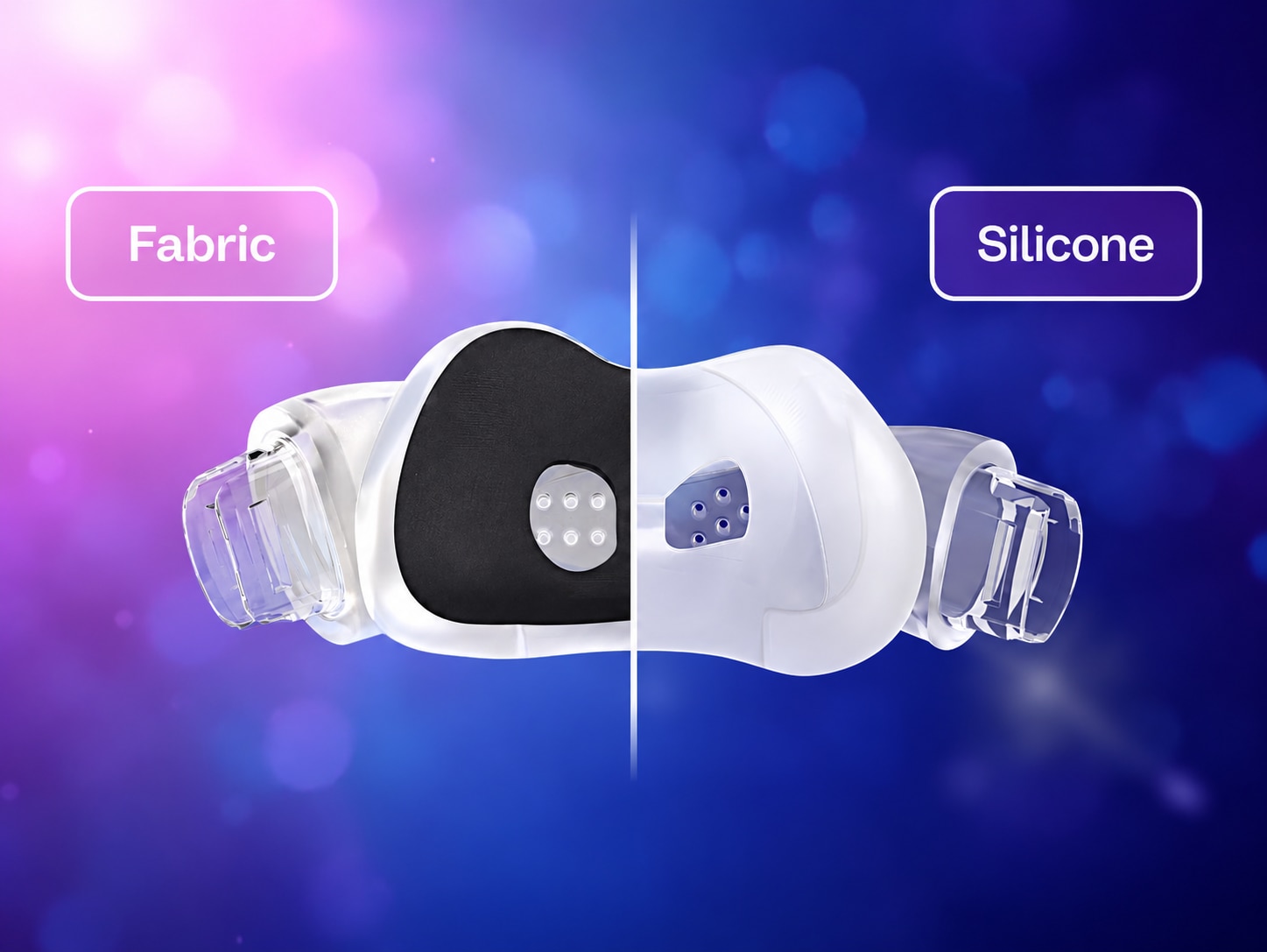
     1 / 1 – Fabric vs. Silicone CPAP Mask.png

    Silicone CPAP masks: a familiar and trusted choice

    Silicone masks have been widely used in CPAP therapy for many years and are available across different mask styles, including full face, nasal and nasal pillow masks.

    For many people, silicone provides the comfort, fit and therapy performance they need. It is flexible and can form a secure seal around or beneath the nose or around the nose and mouth, depending on the mask design.

    If you are comfortable with your current silicone mask and it works well with the way you sleep, there may be no reason to change simply because another material is available.

    For other people, however, the way a mask feels against the skin can become an important consideration. This is where newer fabric technology introduces a different approach to mask comfort.

    Fabric CPAP masks: a different approach to comfort

    Fabric introduces a softer feel where the mask comes into contact with your skin.

    Rather than relying solely on traditional silicone at these contact points, newer mask designs incorporate soft, breathable fabric where the new mask touches the skin, offering a different approach to comfort.

    Fabric technology may be particularly interesting if you place a high value on how your mask feels against your face. Depending on the mask design, fabric can offer:

    • A reduced chance of waking with red facial marks1
    • A softer feel against the skin
    • Breathable material where the mask touches your face
    • Moisture-wicking properties that help manage heat and moisture

    Fabric gives you another material to consider when looking for a mask that suits your individual comfort preferences.

    How fabric technology offers a different comfort experience

    The Resmed AirTouch™ N30i nasal mask is one example of how fabric technology is being incorporated into CPAP mask design.

    The AirTouch™ N30i is a tube-up nasal mask featuring Resmed’s fabric cushion, together with a fabric-covered frame. The material is breathable and moisture-wicking and is designed to provide additional softness and comfort during therapy.1,2,3

    Interested in fabric mask technology? Explore the AirTouch™ N30i nasal mask and discover its comfort features.

    “ 94.4% preferred the feeling of the AirTouch™ N30i fabric material on their face compared with the silicone material of their own mask.1 ”

    Want to hear about a real experience with fabric mask technology? Watch Leo’s story to discover his experience with AirTouch™ N30i after 15 years of CPAP therapy*.

    Should you consider switching from silicone to fabric?

    Changing your mask does not mean there is something wrong with CPAP therapy or that your current mask has failed.

    Your needs can change over time. Your sleep position may change, your skin may become more sensitive, you may grow facial hair or you may simply become more aware of the comfort features that matter to you.

    It may be worth exploring different mask options if:

    • Your current mask regularly feels uncomfortable against your skin
    • You notice pressure or marks where the mask touches your face
    • Your mask makes it difficult to sleep in your preferred position
    • You are interested in a softer material at the points where the mask meets your skin
    • You have been using the same type of mask for some time and want to understand what newer options are available

    Even if you’ve become used to your current mask, that does not necessarily mean there isn’t another option that may suit your needs better.

    Your doctor or care team can help you understand which mask type and material are appropriate for your therapy needs.

    Ready to explore your mask options?

    Explore our guide to learn more about different mask styles, materials and comfort features.

    Disclaimer

    PROMOTIONAL MATERIAL – CE-marked medical device (CE0123). Manufacturer: Resmed. Local contact: Resmed. Please refer to the instructions for use for relevant information related to any contraindications, warnings and precautions.

    *  This testimonial is genuine and documented accounts of the individual’s response to treatment. Outcomes and results may vary, and each individual’s response does not provide any indication, warranty or guarantee that other people will have the same or a similar experience.

    This blog post contains general information about medical conditions and treatments. It is not intended to be a substitute for professional medical advice, diagnosis or treatment. The information is not advice, and should not be treated as such. You must not rely on the information on this website as an alternative to medical advice from your doctor or other professional healthcare provider.

    If you have any specific questions about any medical matter, you should consult your doctor or other professional healthcare provider. If you think you may be suffering from any medical condition, you should seek immediate medical attention. You should never delay seeking medical advice, disregard medical advice, or discontinue medical treatment because of information on this website. The views expressed on this blog and website have no relation to those of any academic, hospital, practice or other institution with which the authors are affiliated and do not directly reflect the views of Resmed or any of its subsidiaries or affiliates.

    References
    1. Resmed external 90-day study of 120 patients conducted between May 31, 2023, and Nov. 6, 2023. Data on file; ID A5454700.
    2. Resmed internal test report. Data on file; ID A5500551.
    3. Resmed external clinical study of 33 patients conducted remotely via Zoom between Oct. 13, 2021, and Nov. 11, 2021. Data on file; ID A5100431.


    Get the latest from Resmed

    Please answer the question above

    Please answer the question above

    By signing up, you agree to our Terms, Privacy Policy, and to receive marketing updates from Resmed.